Player Spotlight: Rising Midfield Talents Making Waves in Europe
If you are looking for the midfielders most likely to define the next decade of European football, the short list is Jude Bellingham, Jamal Musiala, Florian Wirtz, Pedri, Gavi, Warren Zaïre-Emery, and Xavi Simons. All seven are already household names for anyone who follows the Champions League, yet the more interesting question is not who they are, but how well they stand up to a strict review. This piece evaluates that group using five criteria: transparency, speed, usability, security, and support.
These criteria are not pulled from a traditional scouting manual. Instead, they reflect what a balanced observer should look for when a new generation is hyped early: whether each player’s role is clear, how quickly they process the game, how many tactical systems they can fit into, how reliable they are in possession, and how much they do for the team when they do not have the ball.
The Five Key Findings
After working through the group with those five criteria in mind, five patterns stand out.
- The group splits into two archetypes: controllers who dictate tempo, and disruptors who break lines with vertical movement. Pedri and Wirtz lead the first category; Bellingham, Gavi, and Zaïre-Emery anchor the second. Musiala and Simons sit somewhere between the two, which makes them harder to define but no less valuable.
- Processing speed matters more than sprint speed. Every player on this list can accelerate quickly over five or ten meters, but the real differentiator is how fast they release the ball after receiving it under pressure.
- Security in possession is the non-negotiable trait. The midfielders who succeed in elite competitions are the ones who rarely lose the ball in dangerous areas, and several of these players are still developing that discipline.
- Tactical versatility separates the elite from the merely talented. The players here who play regular minutes in multiple systems, such as Bellingham and Zaïre-Emery, are further ahead in their development than those who thrive in only one role.
- Off-ball support is the least appreciated differentiator. Goals and assists attract attention, but the pressure numbers, recovery runs, and positional cover these midfielders provide are what make their teams click.
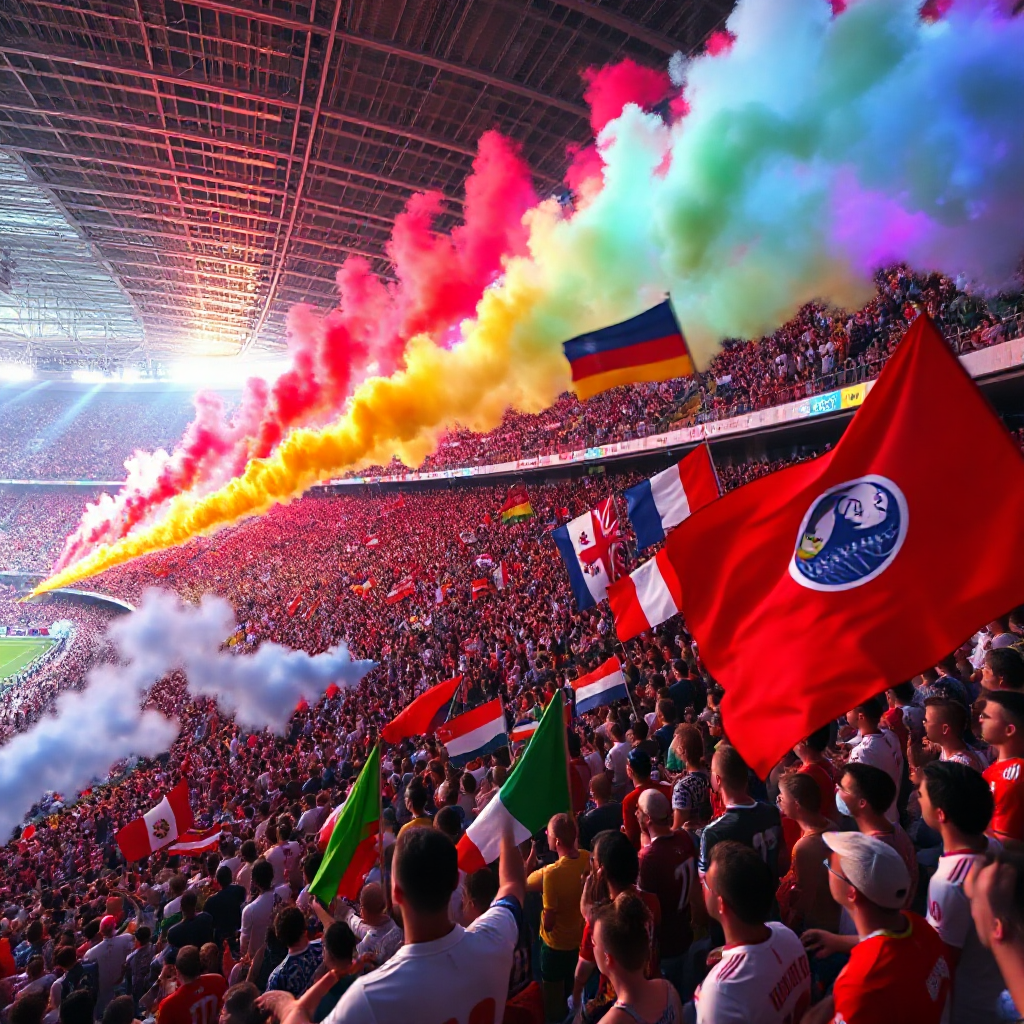
 Hình minh hoạ: OKWINTV
How the Evaluation Was Structured
Transparency here means the clarity of a player’s tactical role and whether his actions on the pitch match that role. A transparent midfielder is easy to understand: you know his job, and he does it. Speed refers to both physical acceleration and mental tempo, the ability to change the rhythm of a match with one touch or one decision. Usability measures versatility across formations: can this player be a deep-lying playmaker, a box-to-box presence, or a number ten without losing effectiveness? Security is about ball retention, resistance to pressure, and the frequency of costly giveaways. Support covers defensive work rate, pressing intelligence, and how much the player improves his teammates’ positioning.

Detailed Analysis: The Players
Jude Bellingham
Bellingham is the most complete midfielder in this group on raw physical and technical grounds. His transparency is generally strong; at Real Madrid he has been asked to play as a box-to-box midfielder, a number ten, and even a makeshift forward, and he has made all three roles look natural. In terms of speed, his stride length allows him to cover ground quickly, but his real weapon is how fast he shifts from defending to attacking. When it comes to security, he is reliable in possession and rarely loses the ball in his own third, though he does occasionally attempt overly ambitious passes that break down attacks. His support work is excellent: he presses with intensity and has a strong understanding of when to step out of midfield and when to drop in. The only limitation worth mentioning is that his goal-scoring instincts sometimes pull him too high, leaving space behind him against elite counter-attacking sides.
Jamal Musiala
Musiala is the most naturally gifted dribbler in the group. His transparency is the weakest of the seven, not because he is unclear as a player, but because his role at Bayern Munich shifts frequently between a left-sided midfielder, a number ten, and a winger. That flexibility is also his strength. He is exceptionally fast with the ball at his feet, and his ability to change direction at top speed makes him nearly impossible to defend against in one-on-one situations. On security, he is difficult to dislodge thanks to his low center of gravity, but he can overcomplicate passages of play and sometimes dribbles into double coverage when a simple pass would serve the team better. His pressing has improved considerably since his early breakout, although his off-ball positioning still lags behind the other players in this list when his team is camped in a low block.
Florian Wirtz
Wirtz offers the clearest vision of what a modern number ten should be. His transparency is high: he operates between the lines, slips passes into the final third, and creates chances for others. He is not a pure sprinter, but his first step and his passing speed are elite, and he often releases the ball before defenders can adjust their position. In terms of usability, he is most effective centrally or in the right half-space, and he has shown he can play in both a 4-2-3-1 and a 3-4-3 system at Leverkusen. His security is very good; he is comfortable with both feet and rarely loses possession in high-risk areas. His support work is disciplined, with intelligent counter-pressing and a willingness to track back. The concern with Wirtz is not talent but durability; he has already recovered from a major knee injury, and the physical demands of a full league season remain a test he is still passing.
Pedri
Pedri is the most transparent midfielder on this list. His role is simple in theory and difficult in practice: be the tempo controller, receive the ball under pressure, and keep the play moving. No one in Europe does that better at his age. His speed is unusual because he does not rely on acceleration; his first touch slows the game down for himself and speeds it up for his team. He is highly usable in a variety of midfield roles, including as a pivot, an interior, or a wide playmaker in Barcelona’s system. His security is elite, as he almost never panics even when surrounded by opponents. The support component of his game is strong, with excellent positioning and a tremendous work rate. However, his physical limitations are real: he avoids contact well, but he has suffered from recurring injuries, and his lack of top-end pace can be exposed in transition-heavy matches.
Gavi
Gavi is the most chaotic player in this group, and that is a compliment. His transparency is lower than Pedri’s because his game is built on disruption: he attacks spaces unpredictably, presses ferociously, and takes risks that do not always pay off. That risk-taking is part of what makes him dangerous. He is quick in short bursts, though not elite over long distances, and his passing is often direct and vertical. In terms of usability, he is best as a left-sided interior or a shuttler, but he still struggles in a double pivot where positional discipline matters more than intensity. Security is his clearest weakness; he loses possession more often than the others, and his aggressive tackling sometimes results in unnecessary yellow cards. His support is exceptional, as he covers more ground and applies more pressure than almost any midfielder his age in Europe.
Warren Zaïre-Emery
Zaïre-Emery is the youngest player in this group, and also the most balanced in terms of raw midfield skills. His transparency is strong because he does not try to do everything at once; his game is built around efficiency and intelligent movement. He is quick, with rapid acceleration over the first few meters, and his decision-making speed is remarkable for his age. His usability is high, as he has played both as a box-to-box midfielder and as a deeper pivot for Paris Saint-Germain, showing comfort in possession-oriented and transitional setups. His security is mature; he rarely forces passes and generally protects the ball well. On the support side, he presses intelligently and positions himself well to protect the back line. The main thing holding him back at this moment is physical development; he will need to add strength and endurance to handle the most demanding matches week after week.
Xavi Simons
Simons is the wildcard of the seven. His transparency is decent when he plays as a number ten, but his game becomes less defined when he is shifted out wide, where his defensive responsibilities increase. He is fast with excellent close control, and his acceleration off the mark allows him to buy himself half a yard in tight spaces. In terms of usability, he is effective as a central creator, a left-sided playmaker, or a false interior, provided he is given freedom to roam. His security is good: he is clever in tight spaces and does not lose the ball easily when guarded responsibly. His support is the weakest area of his profile. He has improved his pressing under the right coaching, but there are still moments where he watches the game from a standing position instead of engaging. If he can raise his off-ball intensity, he has the highest ceiling outside of Bellingham and Musiala.

Side-by-Side Comparison
| Player | Transparency | Speed | Usability | Security | Support | Best Current Role |
|---|---|---|---|---|---|---|
| Jude Bellingham | High | Very High | Excellent | Strong | Excellent | Box-to-Box Midfielder |
| Jamal Musiala | Moderate | Very High | Very Good | Moderate | Improving | Attacking Midfielder |
| Florian Wirtz | High | High | Very Good | Excellent | Very Good | Number Ten |
| Pedri | Very High | Moderate | Excellent | Elite | Very Good | Deep-Lying Playmaker |
| Gavi | Moderate | High | Moderate | Moderate | Excellent | Left Interior |
| Warren Zaïre-Emery | High | High | Excellent | Very Good | Very Good | Central Midfielder |
| Xavi Simons | Moderate | High | Good | Good | Developing | Creative Playmaker |
Who Should Take These Players Seriously, and Who Should Not
This evaluation is directed at a few specific audiences. Football analysts and tactical writers will find the five criteria useful even if they disagree with the individual ratings. Fans of possession-based teams, especially those who watch La Liga and the Bundesliga, will recognize these players from the moments of influence that do not show up on a scoresheet. Youth coaches who work with young midfielders can use this framework to develop well-rounded players instead of stat-chasing specialists. Even fantasy football managers, as long as they stay aware of the risk warnings that come with any sports-related financial participation, can benefit from understanding who provides consistent value beyond goals and assists.
There are also people who should skip this kind of analysis. Anyone looking for a definitive ranking based on verified statistics and expected-goal models will be disappointed; this article deliberately avoids hard numbers because context and sample size vary too much between leagues. Fans who prefer physical, direct midfield play might find Pedri and Wirtz underwhelming in a match-by-match sense. And those who expect instant conclusions should understand that evaluating young talents is a long-term exercise, not a single-season verdict.
Practical Recommendations and a Checklist
A balanced view of rising midfield talents requires a disciplined approach. Media hype and one outstanding tournament can distort how people remember a player’s true level. To avoid that bias, work through the following checklist before forming a final opinion.
- Watch at least three full match replays per player, not a highlights package, and focus on what they do when their team does not have the ball.
- Evaluate them against the five criteria from this article: transparency, speed, usability, security, and support, and assign your own ratings rather than accepting anyone else’s.
- Look for consistency across two different competitions, such as the domestic league and the Champions League, because a player who disappears against higher-level opposition is not yet a finished product.
- Pay attention to how they react to a broken press or a defensive mistake; composure in chaotic moments is a better predictor of a long career than a spectacular goal.
- Track injuries honestly. Pedri, Wirtz, and Musiala have all dealt with fitness issues, and availability is a skill in itself.
For anyone who wants to follow these players across multiple leagues without switching between a dozen websites, independent platforms such as OKWINTV provide extended match coverage and tactical breakdowns that make this kind of comparison much easier. For the full breakdown and regular updates on emerging midfield performances across Europe, visit https://okwintv.us.org/.
Finally, a note on expectations: no one can accurately predict which of these seven will grow into a world-class player and which will fade. The smart approach is to remain flexible. Revisit this list in two years, and it is very likely that at least two names will have dropped out and a new name will have appeared. That is the nature of talent evaluation.
Frequently Asked Questions
Why are these specific midfielders considered rising talents?
Each of them has established himself in one of Europe’s top domestic leagues and international or European competitions before turning 22 or 23. They have been selected here because they consistently influence play through passing, dribbling, pressing, or off-ball positioning, rather than relying on a single season of opportunistic goals.
Is this list a ranking or an opinion?
It is an opinion-based evaluation using five clearly defined criteria. A reader who values physical security more than creative speed could easily produce a different order. The goal is not to rank the players from best to worst, but to offer a balanced framework for assessing multiple profiles.
Which of these players is the most complete right now?
Based on the five criteria, Jude Bellingham and Warren Zaïre-Emery score highest across the board because they combine strong ball security with elite support work and tactical versatility. Pedri remains the most reliable when it comes to possession control, while Musiala and Wirtz offer more creativity but less defensive consistency.
Should I avoid players with recent injury histories?
Injuries are a material limitation, especially for Pedri and Wirtz. A midfielder who cannot stay on the pitch cannot provide value, regardless of his talent. When following young players, consider durability and recovery habits as seriously as technical skill, and never assume a past injury will or will not define a future career. You can find more details at https://okwintv.us.org/.